
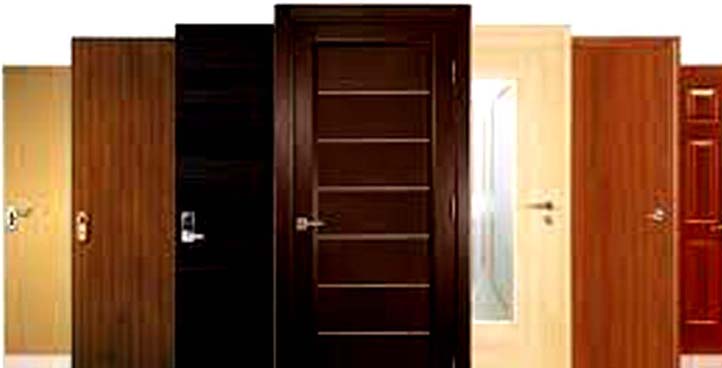
DOORS
Plywood doors are a popular choice in homes, offices, and commercial spaces because they combine durability, affordability, and versatility. Here’s a detailed description of plywood doors:
1. Construction
Core Material: Plywood doors are made from layers of thin wood veneers glued together with their grains placed at right angles, which enhances strength and reduces warping.
Frame: Usually supported by a wooden frame to add rigidity.
Types of Finish: They can be left plain, laminated, veneered, or painted depending on design requirements.
2. Types
Flush Doors: Smooth, flat-surfaced doors with a plain design, often laminated or veneered for aesthetics.
Panel Doors: Designed with raised or recessed panels for a more decorative appearance.
Hollow-Core / Solid-Core: Hollow-core plywood doors are lightweight and cost-effective, while solid-core ones are stronger, heavier, and provide better sound insulation.
3. Features
Strength & Durability: Resistant to cracking and shrinking compared to solid wood.
Stability: The cross-grain structure prevents expansion or contraction due to humidity.
Lightweight: Easier to handle and install than solid hardwood doors.
Customizable: Can be cut, polished, painted, or laminated to match interiors.
4. Applications
Used in residential buildings (bedrooms, kitchens, bathrooms),
Commercial spaces (offices, institutions),
Partitions, wardrobes, and cabinets in addition to regular door usage.
5. Advantages
Cost-effective compared to solid wood.
Wide variety of designs and finishes available.
Environmentally friendly when made from sustainably sourced wood.
Easy maintenance.
6. Limitations
Not as premium-looking as natural hardwood.
May not withstand prolonged water exposure unless marine-grade plywood is used.